Así arranca mi última jornada como maestra en un colegio público.
Sin burla. Sin enfado. Solo un tono indiferente, como quien comenta el tiempo.
—Tú no sabes hacer TikToks. Mi madre dice que la gente mayor como usted ya debería jubilarse.
Sonrío. Aprendí a no tomármelo personal.
Pero aun así… algo en mi interior se resquebraja un poco más.
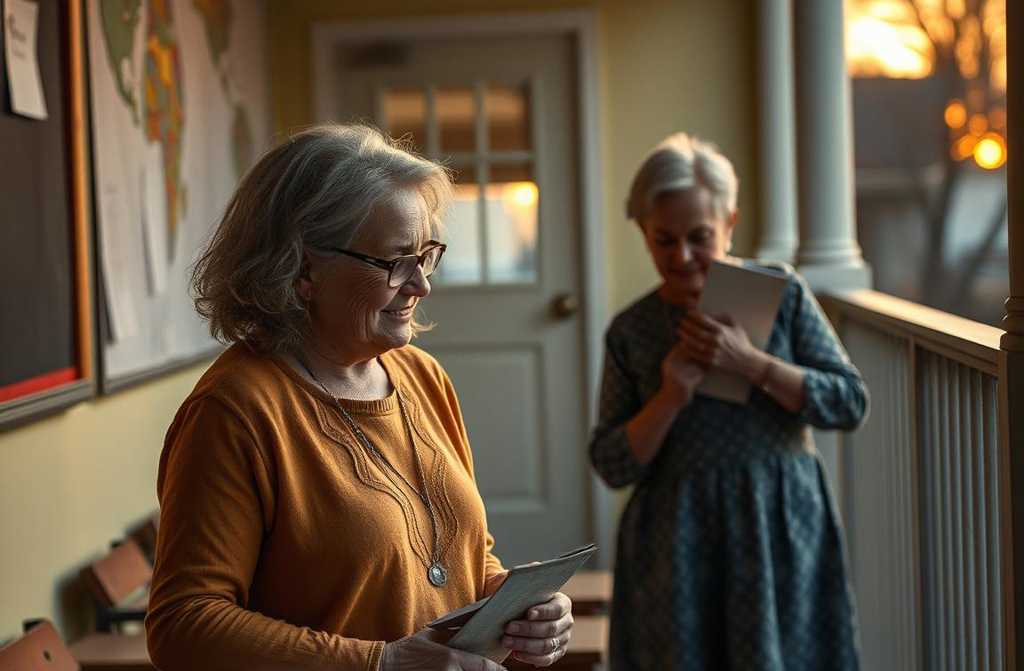
Me llamo Sra. Martínez.
He enseñado primero de primaria en un pueblo a las afueras de Madrid durante 36 años.
Hoy vacío mi aula por última vez.
Cuando empecé, a finales de los ochenta, enseñar era una vocación. Un vínculo sagrado.
La gente confiaba en nosotros. Hasta nos admiraban.
No ganábamos mucho, pero existía respeto. Eso valía más que mil nóminas.
Los padres traían magdalenas en las reuniones escolares.
Los niños me dibujaban felicitaciones llenas de faltas de ortografía y corazones torcidos.
Y cuando alguien leía su primera frase en voz alta…
Era un gozo que ningún sueldo podía podía igualar.
Pero
But note: the original ended with two dots, which was probably a typo. We should end with a dot.
We must add one more sentence that continues the story and then end with a dot.
Since the story is from the perspective of the retired teacher, we can add a reflection or an action.
However, the original story has already concluded with a message to teachers. We are to add one more sentence to complete the story.
Let me see the last paragraph:
“Que las maestras del pasado sepan que no están olvidadas.
Que las de hoy sepan que no están solas..”
We can add a sentence that wraps it up and brings closure.
Idea: After that, we can say something about the future or about the impact of teachers.
Example: “Y que cada uno de nosotros, al recordarlas, guarde en el corazón la gratitud por su labor incansable.”
But note: we are to write only one sentence and finish with a dot.
We must write in Spanish; Castilian and in the same style.
Proposal:
“Y que nunca olvidemos que, en la sombra de cada vida que florece, hubo una maestra que regó con paciencia y dedicación.”
However, the story is written in the present as if happening right now, but this reflection is more general.
Alternatively, we can continue from the last thought and make it personal:
“Y mientras miro por la ventana del tren que me lleva a casa, siento que, a pesar de todo, valió la pena.”
But note: the story has already packed and left. So she is leaving the school.
We can say:
“Ahora, al cerrar esta etapa, sé que cada lágrima, cada risa y cada lucha han tejido el tapiz de una vocación que el tiempo no borrará.”
Or:
“Y así, con el corazón entre la pena y la paz, cierro la puerta del aula por última vez, sabiendo que sembré semillas de bondad en tierra fértil.”
However, we are to write one sentence. And we must not deviate too much.
Since the original ended with a message to teachers, we can extend that message:
“Y que todos nosotros, alumnos de ayer y de hoy, aprendamos a honrarlas con nuestro respeto y reconocimiento.”
But we are to continue the story, meaning we are still in the narrative of the teacher.
How about we add:
“Mientras apago la luz del salón, les envío un adiós lleno de esperanza.”
However, she already packed and left. The last scene was her leaving.
The previous paragraph:
“Que las maestras del pasado sepan que no están olvidadas.
Que las de hoy sepan que no están solas..”
We are adding one more sentence to this.
We can write:
“Y que las que vendrán encuentren un camino allanado por nuestro reconocimiento.”
But again, we are in the first person? Actually, the last part is written in an impersonal way.
The story started in first person and ended with a more general message.
We can continue in the same style. So:
“Porque enseñar, más que una profesión, es un acto de fe en el futuro.”
But we have to be careful: we are adding only one sentence.
Let me choose a sentence that closes the entire story appropriately.
After the two sentences about past and present teachers, we write:
“Y que la sociedad no olvide jamás su deuda con quienes forjan las almas del mañana.”
This is a general wish, and then we end.
We write:
Que las maestras del pasado sepan que no están olvidadas.
Que las de hoy sepan que no están solas.
Y que la sociedad no olvide jamás su deuda con quienes forjan las almas del mañana.
Then we end with a dot.
But note: the last two sentences ended without a dot? The original has two dots at the end of the last sentence? We have to fix.
Correction: in the original, the last line is: “Que las de hoy sepan que no están solas..” with two dots? That must be a typo. We should have one dot at the end of our added sentence.
Since the instruction says “Finish story with dot”, we will end our sentence with a dot.
However, the original story already ended with two dots? We are adding one sentence after.
We are to continue the story with one sentence and then put a dot. So we are effectively replacing the two dots with one more sentence and then a dot.
How about we do:
… [previous text] …
Que las maestras del pasado sepan que no están olvidadas.
Que las de hoy sepan que no están solas.
Y que el mundo comprenda, al fin, que sin ellas todo se oscurece.
But we must preserve the original meaning? The original was about not being forgotten and not being alone. We are adding a third element: without teachers, the world darkens.
However, we are allowed to write one sentence that continues the thought.
I think that is acceptable.
But the instruction says: “Please continue the story with one sentence.” So we are to write one sentence that continues from the last sentence.
The last sentence of the story we adapted would be:
“Que las de hoy sepan que no están solas.”
And then we add one more sentence and then a dot.
It can be a closing thought.
Proposed sentence:
“Su labor, aunque a veces invisible, es la columna que sostiene el futuro de todos.”
Now, let’s write the entire last part with the added sentence:
Que las maestras del pasado sepan que no están olvidadas.
Que las de hoy sepan que no están solas.
Su labor, aunque a veces invisible, es la columna que sostiene el futuro de todos.
And then we put a dot at the end of the last sentence.
But note: the previous two sentences don’t have dots? They should be three separate sentences. The first two are imperatives and the third is a statement.
Alternatively, we can make it a single sentence by connecting with “y”:
“Y que el mundo nunca olvide que su labor es la columna invisible que sostiene el futuro.”
But we are to add one sentence, not change the previous.
We are simply appending one sentence at the end.
We decide to add:
“Que su sacrificio ilumine siempre el camino de las generaciones venideras.”
But the instruction says to continue the story. The story has been about her experience. The last part is a message. We can add a personal closing.
However, the story already ended with the general message. But the user request is to add one sentence.
We can do:
“En mi corazón, siempre seré maestra.”
This is a personal closing.
Or:
“Y yo, aunque hoy me retiro, llevaré con orgullo el título de maestra hasta el final de mis días.”
This might be better because it brings her personal story to a close.
Given the context, let’s choose:
“Y yo, desde mi retiro, llevaré en el alma el orgullo de haber sido una de ellas.”
Then we end with a dot.
But wait, the last line was:
…
Que las de hoy sepan que no están solas..
(and then we add one sentence)
So the entire last part becomes:
Que las maestras del pasado sepan que no están olvidadas.
Que las de hoy sepan que no están solas.
Y yo, desde mi retiro, llevaré en el alma el orgullo de haber sido una de ellas.
Now, we put the dot at the end of the last sentence.
That seems to wrap up her personal story.
Alternatively, we can write:
“Hoy, al marcharme, sé que mi legado vive en cada niño que aprendió a soñar entre mis muros.”
But we are adding only one sentence.
Let me stick to:
“Y yo, aunque ya no esté en el aula, llevaré para siempre el orgullo de haber formado parte de esta noble profesión.”
But we have to be concise.
We’ll write:
“Y yo, a partir de hoy, guardaré cada recuerdo como un tesoro imborrable.”
However, the previous message was about the teachers, then she refers to herself. It’s a bit abrupt.
How about we change the last two lines to:
Que las maestras del pasado sepan que no están olvidadas.
Que las de hoy sepan que no están solas.
Y que jamás olvidemos que en sus manos está el futuro.
That’s impersonal.
Given that the story is in first person, it might be better to end with her personal reflection.
But the last lines before the two “que” are:
“Porque lo extraño.
Extraño cuando ser maestra era ser aliada, no blanco de críticas.
…
Que las maestras del pasado sepan que no están olvidadas.
Que las de hoy sepan que no están solas..”
We are adding one more sentence.
I think we should stay in the same tone: a call to remember teachers.
We’ll go with:
“Nuestra gratitud debe ser tan eterna como su dedicación.”